
Hotelier Hot Takes: Do OTAs Help or Hurt Hotel Profitability? Ask ten hoteliers whether OTAs help...
When OTAs Get Expensive: Practical Strategies to Reduce Commission Dependency Without Risking Occupancy
Online travel agencies have become a lifeline for independent hotels—but they’ve also become one of the industry’s most expensive operating costs. Commissions continue to rise, visibility rules are more competitive than ever, and many independent hoteliers feel trapped between needing OTA exposure and wanting to protect their margins.
The truth is, most hotels aren’t actually over-reliant on OTAs because they want to be. They’re over-reliant because internal workflows, pricing discipline, and direct-booking readiness haven’t been optimized to safely shift share back into more profitable channels.
The good news? Reducing OTA dependence doesn’t require a massive marketing budget. It requires better strategy and stronger controls—a combination of pricing automation, streamlined direct-booking touchpoints, and smarter use of tools you already have inside your Hotel Property Management System (PMS).
Below are the most effective, practical steps independent hotels can take to reclaim margin without losing occupancy.
1. Understand Where OTA Dependence Really Comes From
Before lowering commissions, you have to understand where they’re coming from in the first place. Not all OTA business is created equal—and not every distribution channel produces profitable guests.
A. Analyze channel profitability, not just volume
Start by identifying which channels deliver:
-
Higher ADR
-
Longer lead times
-
Lower cancellation rates
-
Lower cost of acquisition
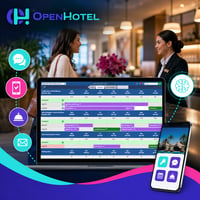
Most PMS platforms make this analysis overly complex, but with OpenHotel’s dynamic reporting and pace tools, hotels can compare ADR, revenue, and booking patterns across each channel in one place.
This type of analysis quickly reveals which OTA relationships add value—and which simply add cost.
B. Study lead times and cancellation behavior
If an OTA produces short-lead “fire sale” bookings with volatile cancellation rates, it’s a prime candidate for strategic cutbacks. Understanding demand patterns gives you the confidence to turn certain promotions off earlier and shift availability to direct channels sooner.
2. Improve Direct-Booking Readiness Before Redirecting Demand
Reducing OTA reliance is impossible if your direct-booking experience causes friction. Guests who encounter slow loading, confusing pricing, or limited room options will retreat to OTAs—costing you commissions you could have avoided.
A. Fix points of friction in your booking engine
Guests expect a clean, mobile-friendly experience.
Key essentials include:
-
A simple checkout flow
-
Clear rate explanations
-
Easy room comparison
-
Visual add-ons and enhancements
OpenHotel’s booking engine supports flexible promo codes, packaged options, upsells, and a clear mobile-optimized experience—ensuring guests actually convert when they choose you directly.
B. Offer direct-only value, not cheaper rates
Rate parity matters, but value parity doesn’t. You can offer:
-
Priority room selection
-
Early check-in
-
F&B credits
-
Parking benefits
-
Loyalty perks
These increase conversion without violating OTA agreements.
C. Use automated pre- and post-stay communication
A key part of any Direct Booking Solution is communication. Guests who receive helpful messages:
-
Trust the property
-
Cancel less
-
Engage more
-
Book direct on future stays
OpenHotel’s automated guest engagement flows (welcome emails, check-in prompts, post-stay review requests, direct-booking offers) streamline this with SMS or email directly from the PMS.
3. Strengthen Rate Discipline With Smarter Automation
This is where most independents lose revenue—manual rate updates create inconsistencies, lag time, and unintended OTA overexposure. A strong Yield Management System fixes that.
A. Stop relying on manual rate and inventory changes
Hotels that manually update rates often:
-
React too slowly to demand
-
Leave promotions running too long
-
Over-distribute to OTAs
-
Miss opportunities to hold back inventory for higher-value direct guests
OpenHotel’s Yield Manager ties directly into both the PMS and the Hotel Channel Manager, creating a connected system that adjusts rate, inventory, and promotions in real time.
B. Automate not just channels—but promotions within those channels
This is the strategic advantage most hotels don’t realize they have.
Instead of turning an OTA “on” or “off,” you can use automation to shut down specific promotions first, then the full channel later.
Example strategy:
-
At 60% occupancy: Automatically close “Last Minute Deal” or other discount-heavy OTA promos.
-
At 70–75% occupancy: Close additional low-margin promotions.
-
At 80% occupancy: Close the entire OTA channel and hold inventory for direct or higher-value sources.
OpenHotel’s full content API sends these updates—rates, restrictions, and individual promotions—to the major channels automatically, without logging into multiple extranets.
This level of precision is typically only available to branded hotels or those paying for enterprise RMS tools. Independent hotels rarely use it, but it’s one of the simplest ways to reduce OTA commissions without losing visibility.
C. Use LOS requirements strategically
Length-of-stay controls reduce one-night “orphan” bookings that disrupt revenue patterns.
A solid rule of thumb:
-
High-demand periods: Minimum 2–3 nights
-
Shoulder periods: More flexible LOS
-
Low periods: LOS promotions with early access via your direct channel
OpenHotel’s proprietary rate system makes LOS enforcement simple across all sources.
4. Keep OTA Visibility Without Feeding Them Your Most Profitable Inventory
You don’t need to eliminate OTAs to reduce their impact. You need to use them for visibility—then convert those guests into direct-booking customers long term.
A. Maintain rate parity but optimize value parity
You should never undercut OTAs on rate, but you should out-deliver on:
-
Flexibility
-
Add-ons
-
Loyalty benefits
-
Guest communication
This creates a natural preference for booking direct next time.
B. Turn first-time OTA guests into long-term direct guests
Automated post-stay communication can turn an expensive OTA guest into a zero-commission repeat guest through:
-
Review requests
-
Direct-booking discount codes
-
Personalized offers for a future stay
-
Email/SMS remarketing
With OpenHotel, these campaigns can trigger automatically based on checkout rules.
C. Use content consistency to boost OTA rankings and reduce cancellations
OTA rankings reward hotels with:
-
Accurate content
-
Updated images
-
Consistent descriptions
-
Correct availability
-
Fewer content discrepancies
OpenHotel’s full content API allows hotels to manage photos, descriptions, specials, and promotions from inside the PMS—all feeding directly to the major OTAs without logging into portals.
Better content equals better visibility—without needing to give OTAs your best inventory.
5. Strengthen Internal Operations to Support More Direct Bookings
Reducing OTA dependency doesn’t work if internal systems can’t keep up.
A. Lost calls = lost direct revenue
If your team can't create reservations quickly, guests return to OTAs.
OpenHotel’s dashboard allows front desk staff to make or modify bookings instantly from a single view of availability, room status, rate type, balance due, and guest history.
A faster team keeps more bookings in-house.
B. Real-time connection prevents overbooking and mismatched inventory
Many hotels still use bolt-on channel managers with lag time.
A Hotel Channel Manager built directly into the PMS eliminates:
-
Sync delays
-
Double entries
-
Inventory mismatches
-
Manual fixes
-
Costly overbookings
OpenHotel’s channel manager is native—no integration layer, no lag.
When your distribution is accurate and stable, you can confidently reduce OTA allocations without fear of errors.
6. Measure Progress and Iterate With Data, Not Guesswork
Distribution strategy isn’t “set it and forget it.” You should evaluate:
-
OTA revenue share vs. direct share
-
ADR differences by channel
-
Occupancy pacing
-
Booking windows
-
Promotional effectiveness
-
Cancellation rates
Dynamic, customizable reporting lets you track these indicators clearly, identify patterns, and adjust your strategy season by season.
Small strategic changes compound into meaningful revenue gains.
Conclusion
Reducing OTA dependence isn’t about cutting off visibility—it’s about controlling it. Independent hotels that combine smarter pricing automation, a streamlined booking experience, targeted OTA usage, and ongoing performance analysis can safely shift business back into direct channels without risking occupancy or damaging revenue.
If you want to take a deeper look at how to rebalance distribution, we’ve created a resource hub with strategies, checklists, and tools to help you build a healthier long-term mix.